CipherWatch Home

Category

Scam & Phishing Awareness

18 articles

The First 72 Hours: Inside the Race Between Hackers and Victims After a Data Breach

The First 72 Hours: Inside the Race Between Hackers and Victims After a Data Breach

Most breach-notification guides treat the incident as a slow-moving crisis to be managed over weeks. The reality is that the most consequential window opens and closes within three days — often before the breached organization has even confirmed what happened. This investigation traces exactly what occurs inside that window, why your credentials lose value the longer they sit unsold, and what faint signals might actually give you a fighting chance to respond in time.

The Badge of Deception: How Verification Symbols Became the Counterfeiter's Most Powerful Tool

The Badge of Deception: How Verification Symbols Became the Counterfeiter's Most Powerful Tool

Blue checkmarks, security seals, and verified badges were designed to serve as shorthand for trust in an environment where authenticity is difficult to verify. Increasingly, however, fraudsters have learned to replicate these symbols with alarming precision, turning the very mechanisms of legitimacy into instruments of deception. Understanding how this sleight of hand works — and why it is so effective — is now a basic requirement of navigating the internet safely.

Washed Clean: How Fraudsters Are Routing Stolen Money Through Crypto Payment Processors

Washed Clean: How Fraudsters Are Routing Stolen Money Through Crypto Payment Processors

Cryptocurrency payment processors were designed to make digital transactions faster and more accessible — but a growing number of criminals are exploiting their speed and pseudonymity to convert stolen funds into untraceable cash. From romance scams to fraudulent e-commerce storefronts, the pipeline from victim to vanished money is becoming increasingly sophisticated. Here is what regulators are missing, what investigators are finding, and what consumers need to recognize before they send a sing

Critical Condition: Why Ransomware Gangs Have Made American Hospitals Their Most Profitable Target

Critical Condition: Why Ransomware Gangs Have Made American Hospitals Their Most Profitable Target

Ransomware criminals have identified American healthcare facilities as uniquely vulnerable — and uniquely lucrative — targets, exploiting aging infrastructure, undertrained staff, and the life-or-death pressure that compels administrators to pay. The consequences extend far beyond disrupted appointments, placing sensitive patient records in the hands of criminal enterprises operating beyond the reach of U.S. law enforcement.

Trusted by Design: How Criminals Are Weaponizing the Two-Factor Authentication Process Against You

Trusted by Design: How Criminals Are Weaponizing the Two-Factor Authentication Process Against You

Two-factor authentication was built to be your last line of defense — but sophisticated phishing campaigns are now turning that very mechanism into a doorway for attackers. By crafting security prompts that are nearly indistinguishable from legitimate bank and platform communications, criminals are exploiting the trust Americans have placed in the 2FA process itself. Understanding how these deceptions work is the first step toward not falling for them.

Counterfeit Confidence: How Forged Trust Badges Are Luring Americans Into Dangerous Websites

Counterfeit Confidence: How Forged Trust Badges Are Luring Americans Into Dangerous Websites

Scammers have mastered the art of mimicking the security signals Americans instinctively rely on before entering payment or personal information online. From fabricated SSL padlock imagery to cloned verification seals, fraudulent websites now wear convincing disguises that even cautious users struggle to penetrate. Understanding how these counterfeit trust indicators work — and how to challenge them — has become an essential skill for anyone who shops, banks, or shares data on the internet.

Trusted Seller, Stolen Identity: How Hijacked Marketplace Accounts Are Fooling American Shoppers

Trusted Seller, Stolen Identity: How Hijacked Marketplace Accounts Are Fooling American Shoppers

Cybercriminals are quietly seizing control of established e-commerce seller accounts — complete with years of positive reviews — and transforming them into storefronts for counterfeit goods, malware, and phishing schemes. The tactic exploits the trust consumers place in platform reputation systems, making fraudulent listings nearly indistinguishable from legitimate ones. Understanding how these takeovers happen is now an essential skill for any American shopping online.

Billed Into Oblivion: The Silent Economy of Subscriptions You Never Agreed To

Billed Into Oblivion: The Silent Economy of Subscriptions You Never Agreed To

Millions of Americans are losing money each month to recurring charges they never knowingly authorized — a problem that thrives in the gap between payment processor policies, opaque cancellation flows, and consumer inattention. CipherWatch investigates how phantom billing schemes operate, why they are so difficult to detect, and what you can do to reclaim control of your financial accounts.

Fine Print, Coarse Intentions: What Tech Giants Are Actually Saying in Their Privacy Policies

Fine Print, Coarse Intentions: What Tech Giants Are Actually Saying in Their Privacy Policies

Privacy policies are legally binding documents that corporations spend millions of dollars crafting — yet the average American spends fewer than 30 seconds reading them. Behind the dense legal language lies a carefully engineered system of disclosure that tells you everything while explaining nothing, leaving your data exposed in ways you almost certainly never intended to authorize.

Manufactured Urgency: How Push Notifications Are Being Weaponized Against Your Better Judgment

Manufactured Urgency: How Push Notifications Are Being Weaponized Against Your Better Judgment

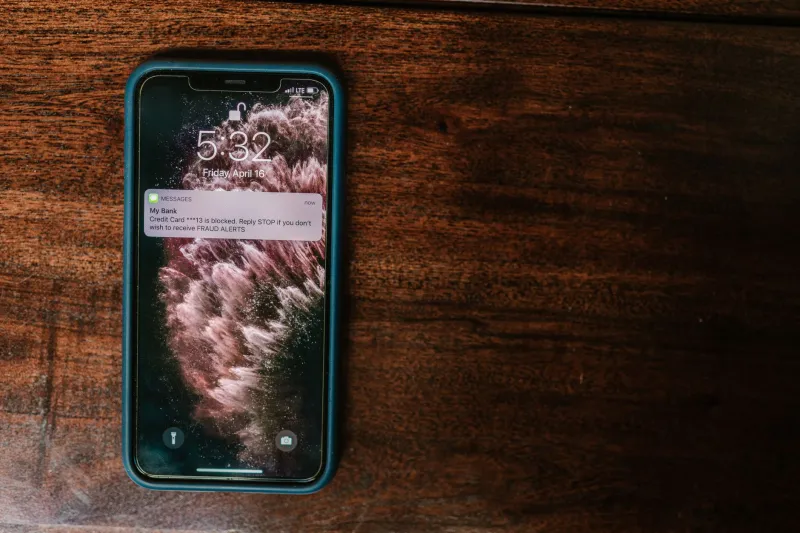
Push notifications were designed to keep you informed. Increasingly, they are being engineered to keep you off-balance. From artificial countdown timers to social-pressure alerts that mimic legitimate security warnings, threat actors and unscrupulous app developers alike have discovered that the fastest route past your defenses is a banner that demands you act right now.

Manufactured Reality: How AI-Generated Political Videos Are Distorting the 2024 Election Landscape

Manufactured Reality: How AI-Generated Political Videos Are Distorting the 2024 Election Landscape

Synthetic video technology has matured to a point where fabricated footage of political candidates is nearly indistinguishable from authentic recordings, and it is already circulating across American social media platforms. CipherWatch examines the tools driving this threat, the documented cases reshaping public perception, and the concrete verification steps every voter should practice before sharing political content online.

Every Step You Take: The Silent Data Trail Mapping Your Daily Life

Every Step You Take: The Silent Data Trail Mapping Your Daily Life

Long before you realize it, your phone, apps, and connected services are assembling a detailed chronicle of where you go, when you go there, and who you meet. Metadata — the invisible layer of information attached to every digital action — has become one of the most powerful surveillance instruments in existence. Understanding how it is collected, shared, and exploited is the first step toward reclaiming control of your own story.

Your Public Record Is Someone Else's Weapon: Inside the Data Aggregation Attacks Targeting Ordinary Americans

Your Public Record Is Someone Else's Weapon: Inside the Data Aggregation Attacks Targeting Ordinary Americans

Across the United States, a growing number of individuals—from private citizens to journalists and public officials—are discovering that their home addresses, daily routines, and personal relationships have been assembled from entirely legal public sources and turned against them. The tactics of doxxing and swatting, once associated with fringe online communities, have matured into coordinated harassment campaigns with documented, sometimes fatal, consequences.

Still Running on Fax: The Crumbling Security Infrastructure Exposing Your Medical Records

Still Running on Fax: The Crumbling Security Infrastructure Exposing Your Medical Records

American hospitals and clinics routinely transmit your most sensitive personal information over fax lines, unencrypted email, and decades-old software platforms that predate modern cybersecurity by a generation. Criminals have taken notice — healthcare remains the most breached sector in the United States for the fourteenth consecutive year. Understanding where the system fails is the first step toward protecting yourself within it.

Hidden in Plain Sight: The Invisible Data Embedded in Every Photo You Share Online

Hidden in Plain Sight: The Invisible Data Embedded in Every Photo You Share Online

Every photograph you take contains far more information than what appears in the frame. Embedded metadata can reveal your precise GPS coordinates, the exact time an image was captured, and the make and model of your device — details that have been used to locate journalists, expose activists, and enable stalking. This guide explains what EXIF data is, why it matters, and how to remove it before sharing images online.

Operation After Operation: Why 2024's Dark Web Busts Didn't Break the Underground

Operation After Operation: Why 2024's Dark Web Busts Didn't Break the Underground

Federal agencies celebrated a string of high-profile dark web marketplace seizures in 2024, but criminal networks proved remarkably resilient. CipherWatch examines what these operations genuinely disrupted, what quickly reconstituted itself, and what ordinary Americans need to understand about the persistent realities of the underground internet.

Your Caller Isn't Who You Think: The Rise of AI Voice Cloning in Everyday Scams

Your Caller Isn't Who You Think: The Rise of AI Voice Cloning in Everyday Scams

A grandmother in Ohio wires $9,000 after hearing her grandson's voice beg for help from a jail cell. A corporate finance officer authorizes a six-figure transfer following a video call with someone who looked and sounded exactly like the company's CEO. Neither call was real. AI-generated voice and video deepfakes have crossed from science fiction into everyday fraud, and Americans are losing money at an alarming rate. CipherWatch breaks down how these attacks are engineered — and how to fight ba